

ES and NQ futures backtesting: five things to set first
E-mini S&P 500 (ES) and E-mini Nasdaq-100 (NQ) futures are core markets for systematic traders. Before trusting a backtest on either, get the contract mechanics right: session, tick value, costs, roll and slippage.
AlphaPrime team ·
1. Globex (ETH) or regular trading hours (RTH)
ES and NQ trade on CME Globex from Sunday to Friday, 5:00 p.m. to 4:00 p.m. Central Time, with a daily maintenance break from 4:00 to 5:00 p.m. CT. Intraday bars inside RTH do not change with the session choice, but daily bars, the opening gap and look-back indicators such as moving averages and ATR do, depending on whether overnight (ETH) bars are included.
Use the same session template in research as on the live chart. An RTH-only strategy whose signals were researched on ETH bars is a common source of backtest-to-live drift.
2. Tick value
Both contracts tick in 0.25 index points, but the multipliers differ. ES is $50 times the S&P 500, so one tick is $12.50. NQ is $20 times the Nasdaq-100, so one tick is $5.00. A wrong multiplier skews every P&L figure and every cost ratio at once.
3. Per-contract costs
Commission plus exchange and regulatory fees are charged per contract, per side. They are small relative to a single trade's range, but a strategy with high turnover pays them many times over. Model them from the first run instead of subtracting them at the end. See trading costs in backtests.
4. Quarterly expiries and the roll
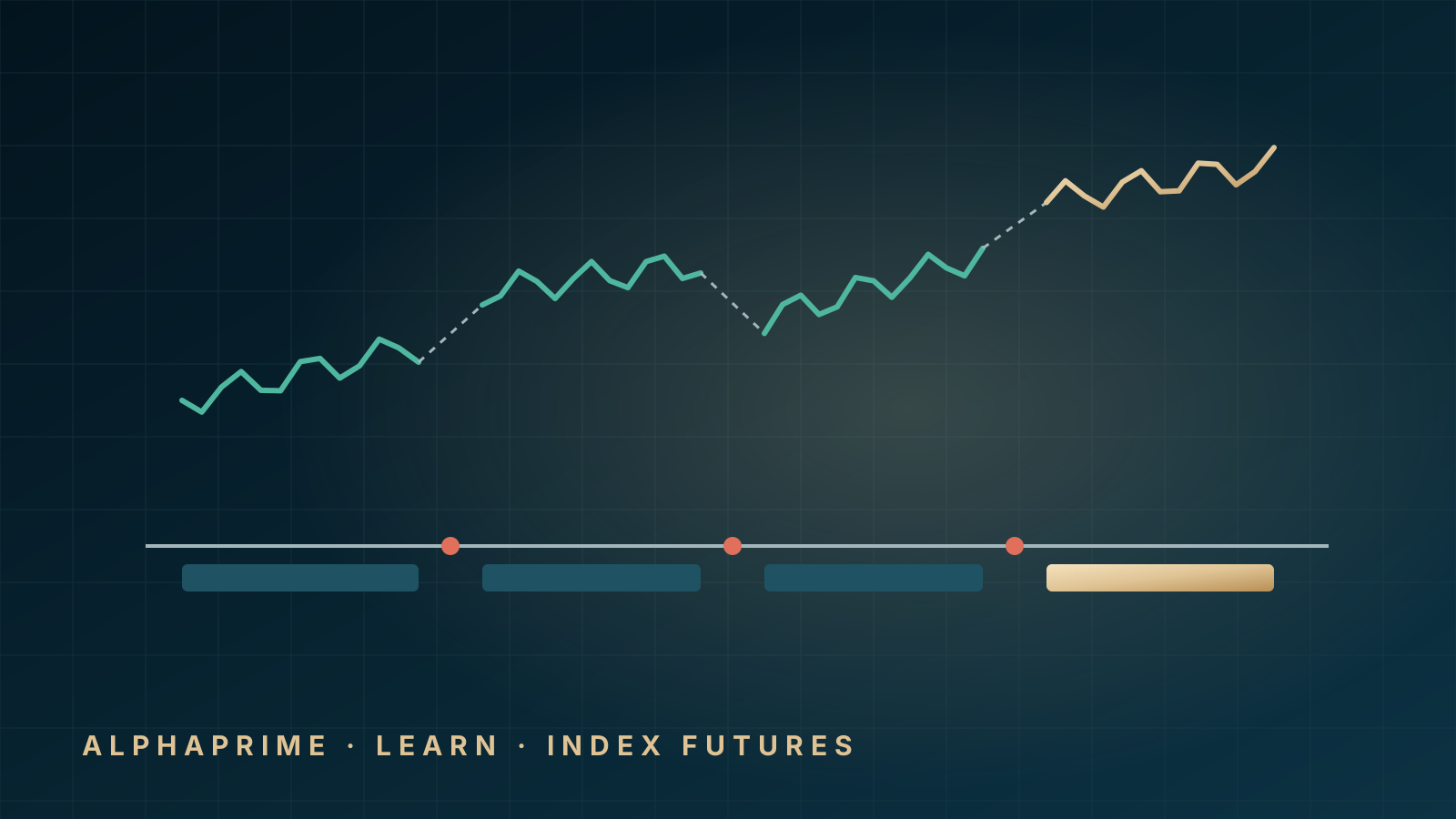
ES and NQ list quarterly contracts for March, June, September and December, and trading in the expiring contract terminates at 9:30 a.m. ET on the third Friday of the contract month. Volume shifts to the next contract in the days before expiry, so any multi-year backtest runs on continuous data that switches contracts somewhere.
Check on which day your data rolls and whether the price difference between the two contracts has been adjusted. That difference is not P&L the strategy earned.
5. Slippage
Even in contracts this liquid, market and stop orders do not always fill at the signal price, especially at the open and around major data releases. Start with one to three ticks per side ($12.50 to $37.50 on ES, $5 to $15 on NQ). A strategy that only works at zero slippage has an edge thinner than its costs.
What AlphaPrime does here
In AlphaPrime you set commission and slippage per market. Historical data can be updated in the software’s Market Data library for research and backtesting within AlphaPrime; you can also import your own bar files. Strategies you keep can be exported as PowerLanguage and compiled in MultiCharts; before the first time, import the AlphaPrime function library into MultiCharts once. See the PowerLanguage checklist for checking MultiCharts trades against the research backtest.